
Technical Article • AGNORA
Bigger. Heavier. More Complex. More Precise.
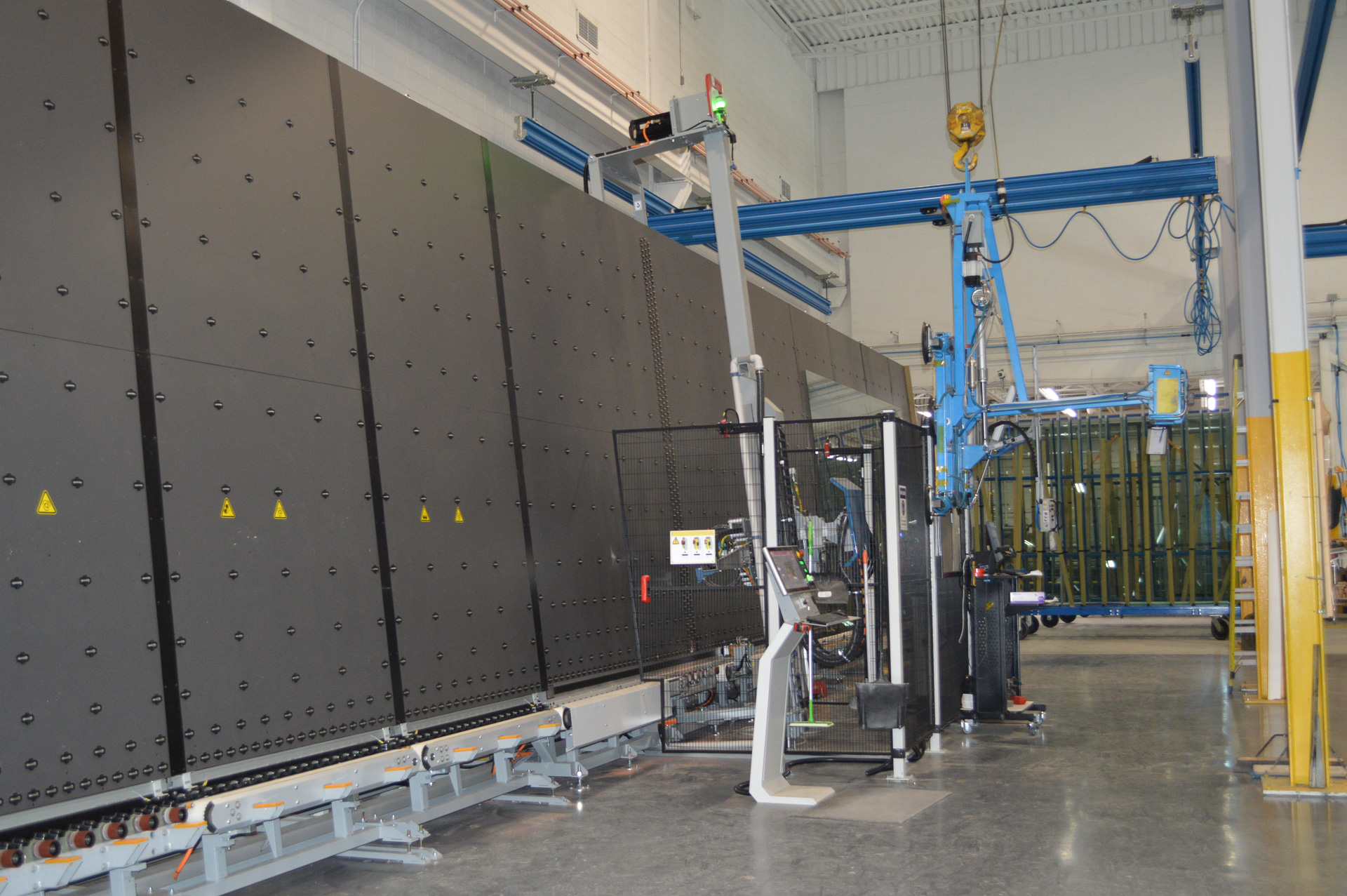 When architects push the limits of modern building design, glass manufacturers must evolve alongside them.
At AGNORA, we’ve invested in next-generation insulating glass technology designed specifically for the realities of today’s architectural projects. Our new Lisec Box Spacer Insulating Glass Production Line – LV 75/33 significantly expands our ability to manufacture large-format, high-performance insulating glass units (IGUs) while improving precision, quality, and efficiency throughout the production process.
While the equipment itself is impressive, what matters most is what it means for architects, façade engineers, glaziers, and building owners.
The answer is simple:
Supporting the Evolution of Architectural Glass
Architectural trends continue to move toward:
- Larger glass openings
- Increased transparency
- Triple-glazed and energy-efficient systems
- Structural glass applications
- Offset and asymmetrical IGU designs
- Heavier laminated constructions
Historically, many of these configurations required extensive manual handling or offline assembly due to equipment limitations.
The new AGNORA production line changes that equation by allowing larger, heavier, and more complex IGUs to be processed automatically through production.
The result is a manufacturing environment engineered to support the types of units increasingly specified on today’s premier residential, commercial, and institutional projects.
Increased Capacity for Jumbo Glass
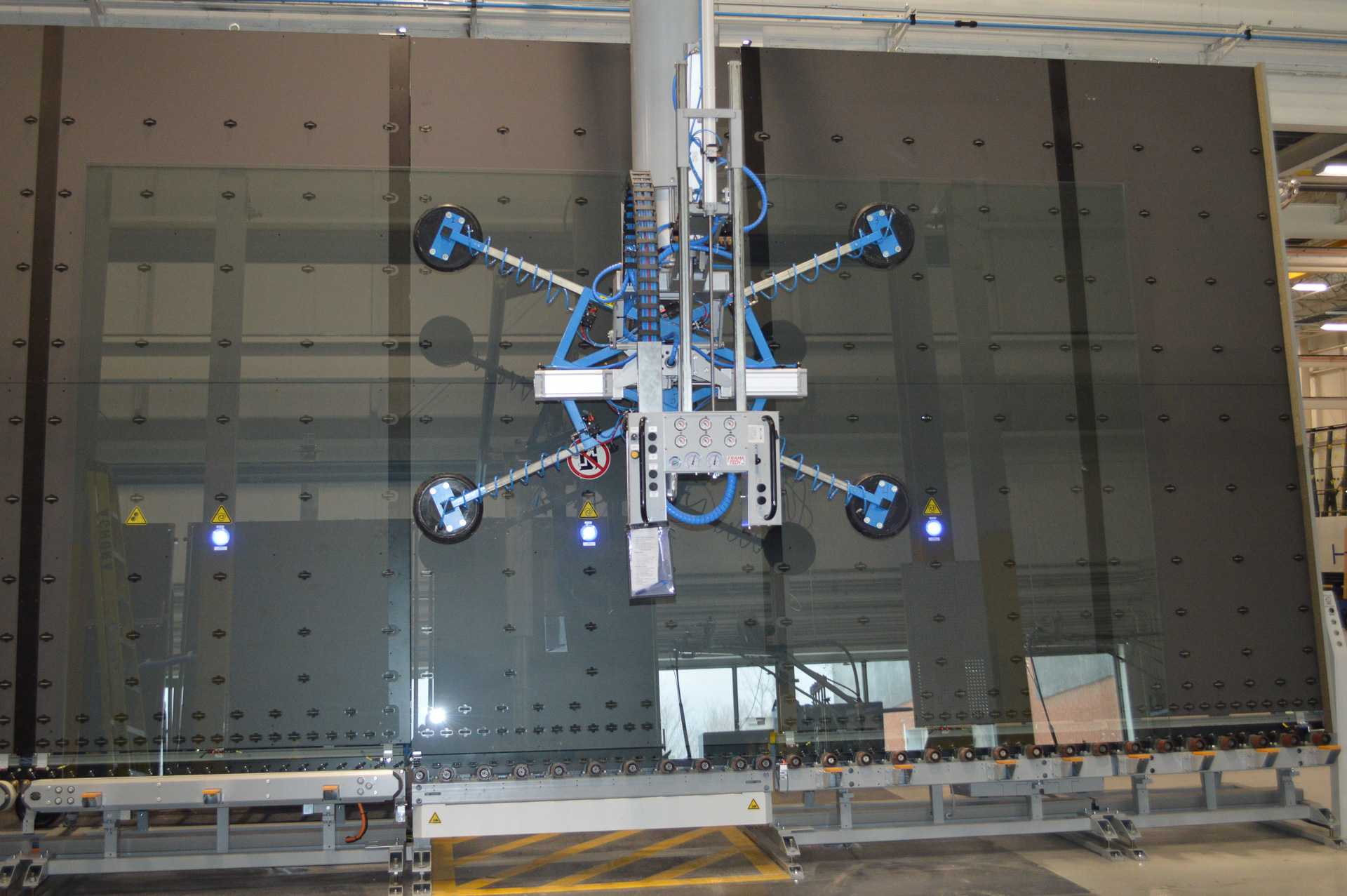
The system is designed to process insulating glass units up to:
3300 mm × 7500 mm (130″ × 300″)
These dimensions align closely with AGNORA’s glass fabrication capabilities, helping ensure that projects utilizing oversized glass can move efficiently from raw substrate through final IGU assembly.
For customers, this means greater confidence when specifying expansive window walls, curtain walls, oversized residential openings, skylights, and other large-scale applications.
Heavier Units Without the Manufacturing Headaches
Triple glazing, thicker laminates, bird-friendly assemblies, specialty coatings, and structural glazing systems all contribute to increased unit weight.
The new production line increases automated handling capacity to approximately:
450 kg/m² or 305 lbs/ft²
That’s some seriously heavy glass and means AGNORA can maximize triple-glazed IGU configurations while maintaining substantial production flexibility.
For customers, this translates into greater throughput—no glass is required to be moved offline, ensuring best-in-class delivery times of 4–6 weeks depending on project scope.
Advanced Triple-Glazed Capability
Energy efficiency standards continue to evolve across North America with IECC 2026 and beyond.
To support these increasingly demanding performance requirements, the new line is capable of processing triple-glazed units with center lites up to 8 mm thick.
These thicker units are necessary for larger window areas. As glass and window areas increase in size, so too does the need to reduce deflection or bending for the same wind-load rating. Thus, larger glass units must be thicker. Energy efficient and robust window durability are achievable with the LV 75/33.
Precision for Complex Architectural Designs
Contemporary architecture increasingly incorporates stepped glass, offset configurations, custom skylights, and complex insulated glazing assemblies.
One of the standout capabilities of the new line is its automated offset assembly functionality.
The system can accommodate:
- Up to 100 mm bottom offsets
- Up to 200 mm offsets on other sides
- Automatic four-sided offset processing
For architects and façade designers, this opens new opportunities to create refined glass details without introducing additional manufacturing complexity.
Improved Seal Quality for Long-Term Performance
Insulating glass performance and long-term durability ultimately depend on seal quality.
The LV 75/33 features enhanced silicone application capabilities that support deeper sealant fills and improved consistency during fabrication. AGNORA’S engineering team notes silicone depths up to 30 mm with corresponding large sightline capabilities.
For owners and glazing contractors, this contributes to long-term durability and quality assurance on demanding projects -especially those that require precision structural silicone sealant.
Greater Consistency Through Automation
One of the largest advantages of advanced insulating glass technology is repeatability.
The system incorporates modern automation features including:
- Automated spacer positioning
- Enhanced glass inspection capability
- Improved alignment during pressing
- Automated secondary sealing processes
The benefit for customers is not merely faster production.
It is more consistent production.
Improved automation reduces variability and helps ensure that the first unit and the hundredth unit are manufactured to the same exacting standards. [Re: Agnora…pt & reply | Outlook]
What This Means for AGNORA Customers
Ultimately, this investment is about enabling architectural ambition.
By increasing our ability to fabricate larger, heavier, and more sophisticated insulating glass units, AGNORA continues to support projects that demand exceptional scale, performance, and visual quality.
Whether the goal is maximizing views, achieving higher thermal performance, integrating complex glass geometries, or pushing the physical limits of architectural glazing, our expanded IGU capabilities are designed to help turn bold concepts into built reality.
The Bottom Line
The new Lisec LV 75/33 production line isn’t simply new equipment.
It’s an investment in:
- Bigger glass
- Better thermal performance
- Greater design flexibility
- Improved manufacturing consistency
- Enhanced project confidence
And for AGNORA customers, that means even greater freedom to build without compromise.
AGNORA delivers ultra-clear, distortion-free glass for demanding projects.
Request a Quote
