
Technical Article • AGNORA
Seeing Design as It Was Intended
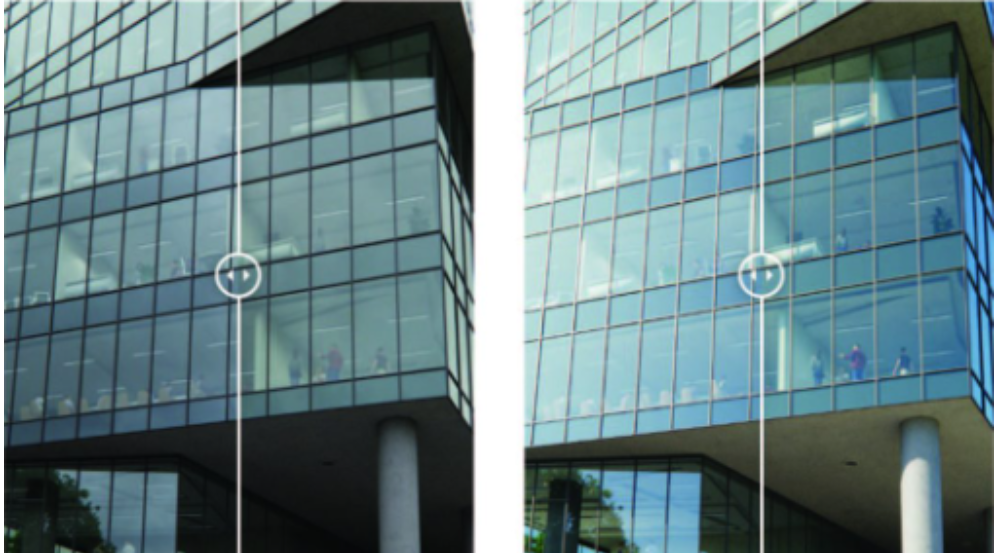 Overcast, 60+ Left, 62/27 Right Clear, 60+ Left, 62,27 Right
When Architects envision a building, they carefully select materials, finishes, artwork, furnishings, and lighting to create a specific visual experience. The glass surrounding that environment should enhance that vision, not alter it.
That’s where color neutrality comes in.
Color neutrality refers to a glass product’s ability to transmit light without introducing unwanted color shifts or tinting. The more color-neutral the glass, the more accurately people experience the colors of the world beyond, and within, the building envelope.
For architects, designers, and building owners focused on aesthetics, occupant comfort, and high-performance facades, color-neutral glass has become an essential specification.
What Causes Glass Color?
| Standard Glass | Low-Iron Color-Neutral Glass |
| Green tint visible | True color rendition |
| Color shift in exterior views | Neutral transparency |
| More noticeable in thick glazing | Consistent clarity |
Most conventional float glass contains small amounts of iron, which can introduce a subtle green hue. While often unnoticeable in thinner applications, this tint becomes increasingly apparent in larger lites, thicker assemblies, and oversized architectural glazing.
As buildings continue to embrace expansive glass facades, maintaining a neutral appearance becomes more challenging, and more important.
Achieving true color neutrality requires careful attention to:
- Low-iron glass substrates
- Advanced coating technologies
- Glass thickness and configuration
- Lamination and insulating glass unit (IGU) design
- Overall building orientation and lighting conditions
The result is glazing that delivers exceptional transparency while preserving the architect’s intended visual experience.
3 Reasons Why Color Neutrality Matters in Modern Architecture
1. Enhanced Visual Accuracy
Whether it’s a luxury retail environment, museum, healthcare facility, or residential, occupants expect to see true colors through the glass.
Color-neutral glazing preserves:
- Interior material finishes
- Exterior views
- Artwork and displays
- Natural daylight quality
The result is a more authentic visual connection between indoor and outdoor environments.
2. Cleaner, More Consistent Facades
Color-neutral glass helps create a refined, uniform appearance across an entire building facade.
Architects increasingly seek glazing solutions that:
- Minimize green, blue, or bronze shifts
- Deliver consistent appearance across different viewing angles
- Maintain aesthetic clarity on large-format glass
This is especially important in contemporary curtain wall systems where glass serves as the primary design element.
3. Improved Daylighting Experience
Daylight is a critical component of occupant wellness and building performance.
When natural light enters a space without significant color distortion, interiors feel brighter, more comfortable, and more connected to the outside environment.
5 Applications Where Color Neutrality Matters Most
Color-neutral glass is particularly valuable in:
1. Corporate and Commercial Buildings
Preserves exterior views and creates brighter, more comfortable workplaces.
2. Museums and Cultural Facilities
Ensures artwork and exhibits are viewed as intended.
3. High-End Residential Projects
Enhances natural daylight and maximizes premium views.
4.Retail Environments
Accurately presents merchandise colors and materials.
5. Hospitality and Mixed-Use Developments
Creates clear, true-to-life views while enhancing guest comfort and overall visual appeal.
Common Specification Mistakes
When evaluating glass for color-neutral applications, consider the complete glazing system, not just the coating.
Common mistakes include:
- Selecting standard glass instead of low-iron substrates
- Overlooking the visual impact of glass thickness
- Evaluating performance data without reviewing visual mockups
- Focusing solely on solar performance metrics
- Ignoring how coatings interact with surrounding materials and facade design
A full-scale mockup remains one of the best ways to assess real-world appearance before construction.
AGNORA’s Perspective
At AGNORA, we understand that architects expect glazing systems to perform without compromising design intent.
Whether a project prioritizes solar control, daylighting, energy efficiency, or oversized glass fabrication, color neutrality is often a critical part of the conversation. Advanced coating solutions from leading manufacturers, including Saint-Gobain and Guardian products offered through AGNORA and Cerritos, help design teams achieve exceptional building performance while maintaining the clean, transparent aesthetic modern architecture demands.
As facades continue to grow larger and more sophisticated, the ability to combine high performance with visual clarity will remain a defining characteristic of successful architectural glass design.
Need custom architectural glass?
AGNORA delivers ultra-clear, distortion-free glass for demanding projects.

